September 18, 2025
“Just Go West, Bro”
“Go west” isn’t just geography. It’s the American operating system. A cultural myth that insists: somewhere out there lies an open horizon, waiting, blank, full of promise. No matter what came before, the land is imagined as empty — a page to be written on, not one already filled. That was the logic of manifest destiny, the restless push from Atlantic to Pacific, the endless hunger for more frontier.
And for a long time, it worked. From Columbus to California, every problem found the same solution: “just go west, bro”. Europe was cramped? Sail across the Atlantic. The East Coast was crowded? Push to the frontier. The frontier closed? Build railroads, oil towns, Hollywood, Silicon Valley. Each step delivered expansion, and the nation learned to expect it — as if destiny itself had guaranteed opportunity without cost.
Of course, the land was never empty. Expansion meant conquest, displacement, and violence. But the cultural illusion was powerful: infinite opportunity, a blank canvas waiting for American will. The frontier became a psychological engine. Every generation believed the horizon lays just one more step away. Even the moon got pulled into the script — a flag planted in silence, the landscape rebranded as American territory.
But the moon also revealed something unsettling. There was no oil, no gold, no waiting civilization. No exchange, no drama. Just dust. A temporary conquest without resistance felt less like destiny and - once they left again - more like anticlimax. Maybe that’s why people still whisper it was faked: a story too empty to believe. Expansion without territorial conflict was expansion without meaning.
By the early 2000s, Silicon Valley stood at the farthest edge of the continent. West of San Francisco, there was nothing left but ocean. The “go west” instinct had run out of land. And yet, libertarians like Peter Thiel tried to make the myth literal one more time: if America ended at the Pacific, then why not build the better America on the Pacific? Seasteading was pitched as Silicon Valley 2.0 — floating cities off the coast, mini-nations unburdened by taxes, regulators, or democratic majorities. West of America, they imagined, lay not only water but freedom itself.
But the Pacific wouldn’t play along. Nature doesn’t care about venture capital decks. Waves, storms, and logistics shredded the dream. The better America never floated. The dream drowned before it ever set sail. That failure marked the breaking point. The map had ended. The Pacific was not a frontier, only a wall. And when the old instinct could no longer push outward, it had to reinvent itself - a typical move for America. If you couldn’t go west anymore, where go next? The answer was radical: inward and upward.
So came the metaverse, infinite worlds built of code. So came the colonization of consciousness through algorithms, feeds, and platforms. If you can’t move borders on the map, move borders in the psyche. The frontier mutated: once it was continents, now it is consciousness. Once it was land, now it is attention. A blank page once again — or so the story goes.
The great American delusion is treating every frontier as “empty.” Just waiting for innovation. But it’s not empty. Colonizing the prairies cost indigenous lives and ecosystems. Colonizing attention costs mental health, silence, and the ability to focus. Colonizing culture means replacing tradition with endless scrolls. Colonizing relationships means swiping until intimacy feels like gig work. Every new frontier is mined as if no one — and nothing — was already living there.
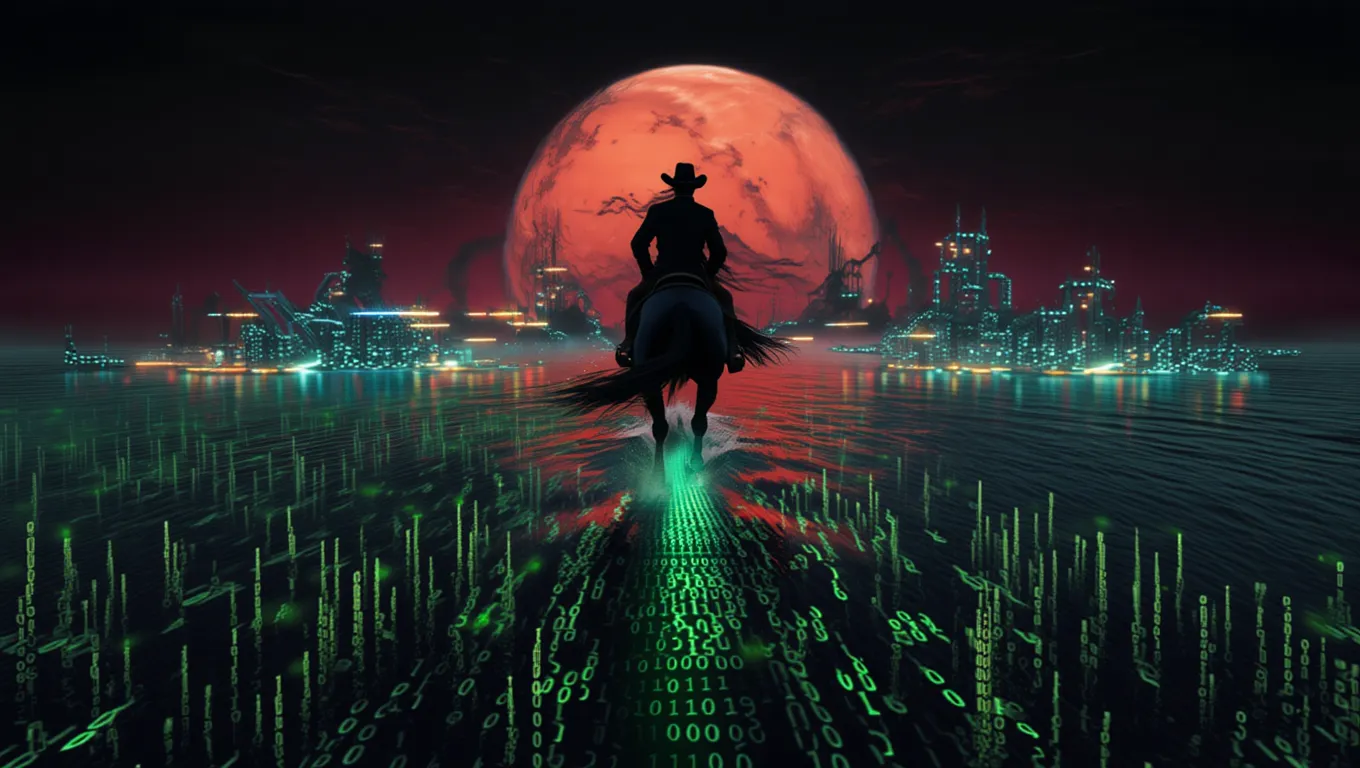
And still, the hunger scans the skies. The continent is full, the ocean won’t scale, the Pacific is a wall — so let’s try a dusty rock in the sky. Mars becomes the last horizon, a literal frontier in an age of simulated ones. For the first time, a frontier that might actually be empty. No civilizations to displace, no rivals to race, just a barren world, waiting. In one sense, it’s the perfect fulfillment of the myth: finally, a truly blank page for America to write on.
But here’s the irony. Emptiness was never what made the story feel real. Every frontier before came with resistance — settlers meeting indigenous peoples, astronauts racing Soviets, Silicon Valley clashing with governments. Resistance gave expansion its weight. Mars might deliver what the myth always promised, and in doing so expose the hollowness at its core.
If astronauts step out and find only silence — no aliens, no rivals, no one to greet them — will it feel like conquest at all? The American imagination still whispers the same line: “just go west, bro”. Even if “west” now means your feed, your mind, or some red dust millions of miles away.